Building in Lonoke
Lonoke, the Lonoke County seat and the only Arkansas county seat that shares its county's name, lies about 22 miles east of Little Rock on Interstate 40. Rice, soybeans and fish and minnow farms surround the town, and the Joe Hogan fish hatchery, the largest one the state owns, sits on its south edge. It's also a bedroom community, so projects here run from big equipment buildings on grain farms to family homes on a few acres.
Sizing a building for rice and soybean equipment
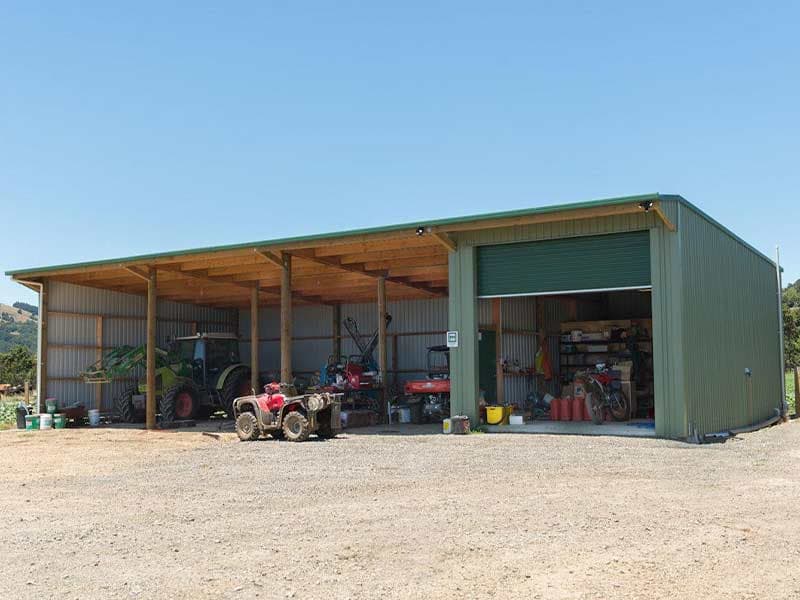
Start with the machines, not the floor plan. Measure your widest piece of equipment the way you actually park it, with headers off or booms folded, and your tallest one including the cab, lights and any auger. Add room to walk around each one and to swing doors open. A combine, a grain cart and a sprayer parked side by side need more width than most people guess.
Door size drives much of the design. A wide, tall end-wall door can call for a heavier header or a longer clear span, and that may push you toward one framing system over another. Give every builder the same equipment list and the same door sizes so their bids describe the same building.
Post-frame, red iron or a mix
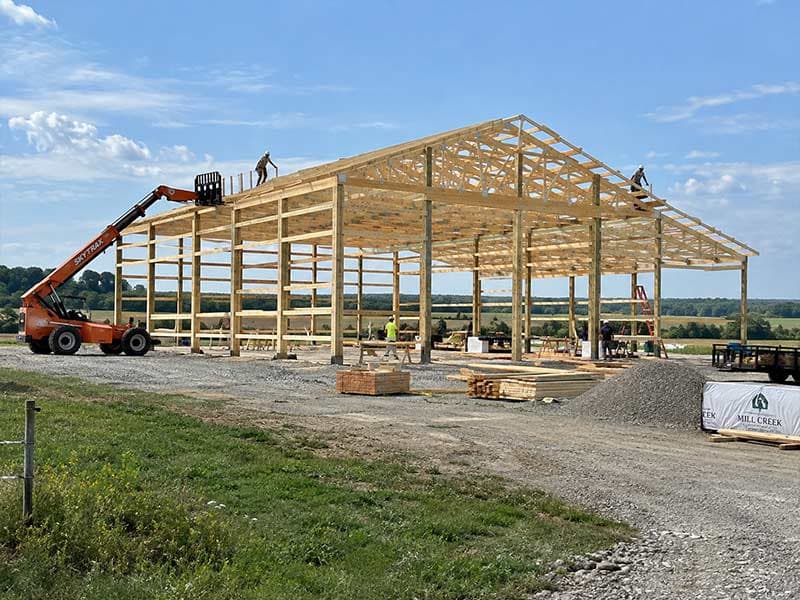
Post-frame is a common pick for farm storage because it covers wide, simple footprints efficiently and works with several foundation options. Red-iron steel, often sold as a pre-engineered metal building, uses steel columns and rafters on a concrete foundation and handles the widest spans and heavy door openings well. Neither one always wins on price. Size, loads, doors and interior finish decide that.
If one end of the building will be a heated shop or office, ask how each system handles insulation and an interior wall. Ask builders to price that finished bay as its own line, so you can see exactly what it adds to a cold storage building.
Level ground and where the water goes
The middle of Lonoke County is prairie land suited to rice and fish farming, and the southern part is Delta alluvial soil. Farm country like this tends to be level, and on level land rain doesn't drain away from a building by itself.
Ask each builder how high they'd set the slab above the surrounding grade, how they'd slope the pad, and where roof water will end up. Ask whether they'd recommend a soil test before the foundation is designed; many builders do on heavy or unfamiliar ground. Look the site up on FEMA's flood maps before you buy, especially land near ditches or low spots.
Placing a building on a working farm
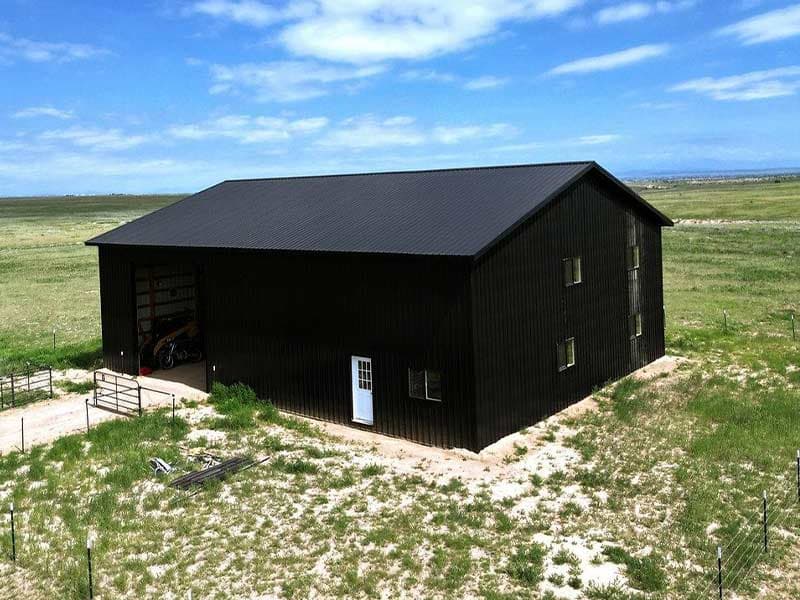
Think about traffic before you think about walls. Leave turning room for a tractor and trailer at each big door, keep the approach out of spots that stay wet, and plan the route grain trucks will take at harvest.
Power is easy to overlook at bid time. Ask whether the price includes running service from the pole, and how many lights and outlets come with it. Adding circuits after the walls are lined usually costs more.
If you'll store grain or seed, tell the builder at the first meeting. Bins, augers and conveyors may decide where the building goes, and stored crops can need ventilation planning that a plain machine shed doesn't.
A house within reach of Little Rock
Plenty of people pick Lonoke for the land and the commute. A few acres outside town can hold a house and a shop, but compare the full cost of a rural lot, with a well or septic system, a longer driveway and power, against a lot in town with utilities at the street.
For the house, you can choose a conventional stick-built custom home, a barndominium framed with stud walls, or living space inside a post-frame or steel shell. Each finishes differently and can appraise differently, so ask your lender early which types it will finance.
Every builder here drives in
No builder listed for Lonoke is based in town. That's fine, but it changes the questions. Ask how far the crew travels, whether travel time is priced in, and how many days a week someone will be on your site.
Ask which parts of the job go to subcontractors, such as dirt work, concrete, electrical and plumbing, and whether those trades are local to Lonoke County or travel with the builder. Ask who handles warranty calls after the final payment and how soon they can get out here. Before you sign, confirm current requirements with the City of Lonoke Community Development office, or with Lonoke County if your land is outside the city limits.
Builders serving Lonoke
The builders listed here come from around central Arkansas. Custom home builders from Little Rock, Jacksonville, Maumelle and Benton serve Lonoke, along with a Vilonia company that builds homes, barndominiums and metal buildings and a Hoxie company that builds post-frame farm buildings and equipment sheds. Statewide post-frame and metal building companies also appear. Our Cabot and Jacksonville pages list more builders nearby.
To compare them, ask each for a recent project in this part of the state you can go see, two or three references, a written scope that lists what's included and excluded, and the warranty in writing. Check each company's license status with the Arkansas Contractors Licensing Board.
Sources: Encyclopedia of Arkansas: Lonoke (Lonoke County), Encyclopedia of Arkansas: Lonoke County, City of Lonoke: Community Development, FEMA Flood Map Service Center, Arkansas Contractors Licensing Board