Building in Lowell
Squeezed between Rogers to the north and Springdale to the south, Lowell is a bedroom community with a working side. It's known as a center of the trucking industry, and its schools are part of the Rogers School District. Building plans here run from family homes on in-town lots to shops for contractors, owner-operators and small fleets.
Shops for trucks, trailers and trades
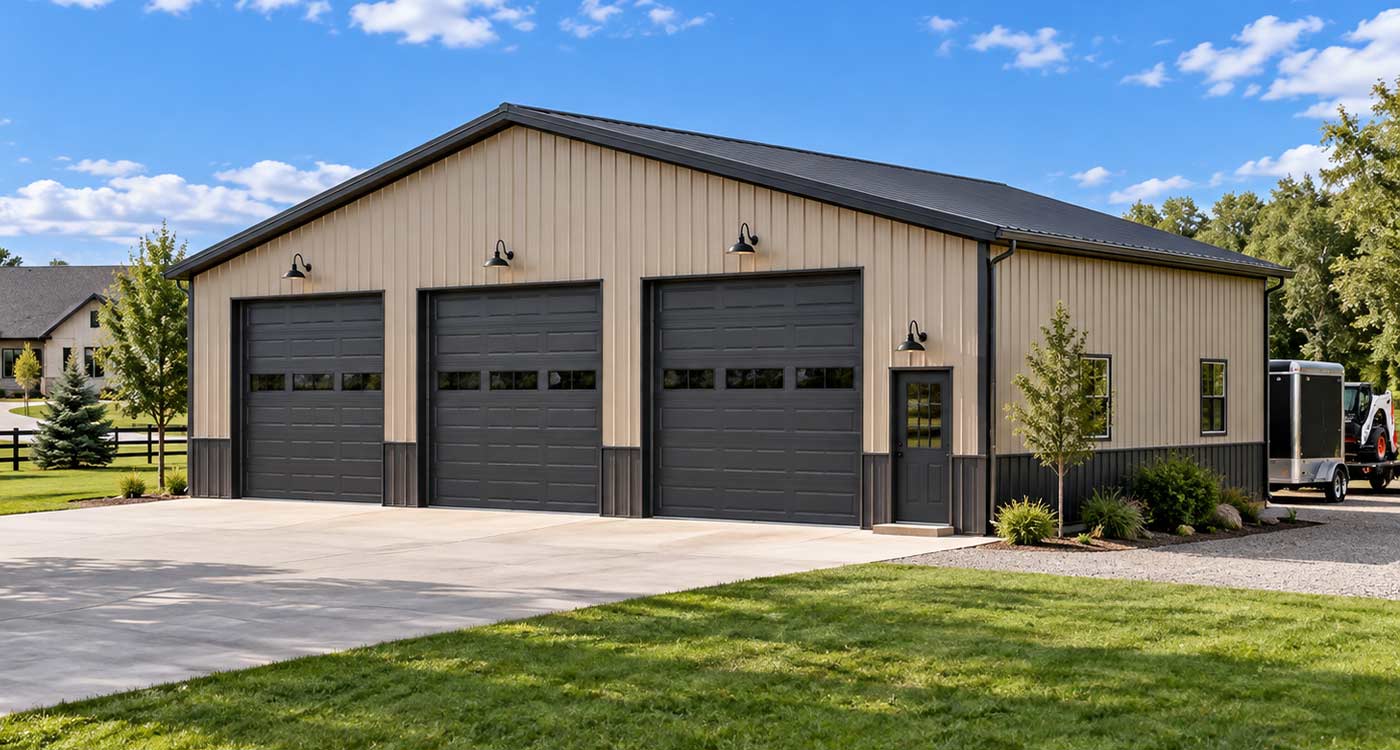
A shop for a pickup and a bass boat is a different building from one that has to swallow a tractor-trailer or a service truck with a ladder rack. Start with your tallest and longest vehicle. Overhead door height, door width and clear height inside drive almost every other choice, from the frame type to the slab.
Think about the floor too. Heavy trucks, a lift or a parts rack all put more weight on the slab than a car does. Ask each builder what slab thickness and reinforcement they'd use for your loads, and whether they'd add a floor drain, a wash bay or a mezzanine for storage. Plan the power as well. Air compressors, welders and battery chargers add up, so ask what electrical service the builder would size for your equipment.
Business use or personal use
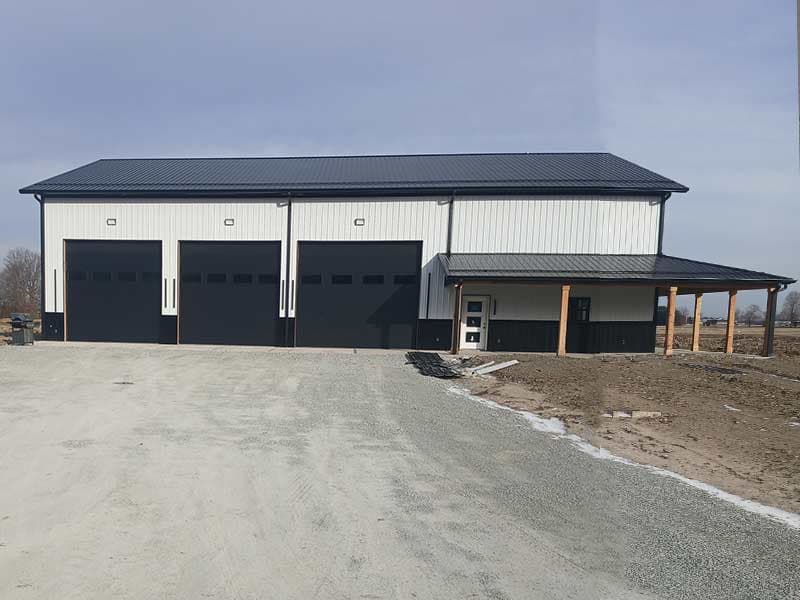
Be clear with builders about how the shop will be used. A personal garage where you happen to work on your own truck is one thing. A building where employees work, customers stop by or fleet vehicles are serviced can call for different design, fire separation, parking or access choices.
You don't need to sort out those requirements yourself, but you do need to say the words "business use" early. Then confirm current requirements with the City of Lowell's Risk Reduction Division, which handles permits and inspections, before the design is final.
Living over or beside the shop
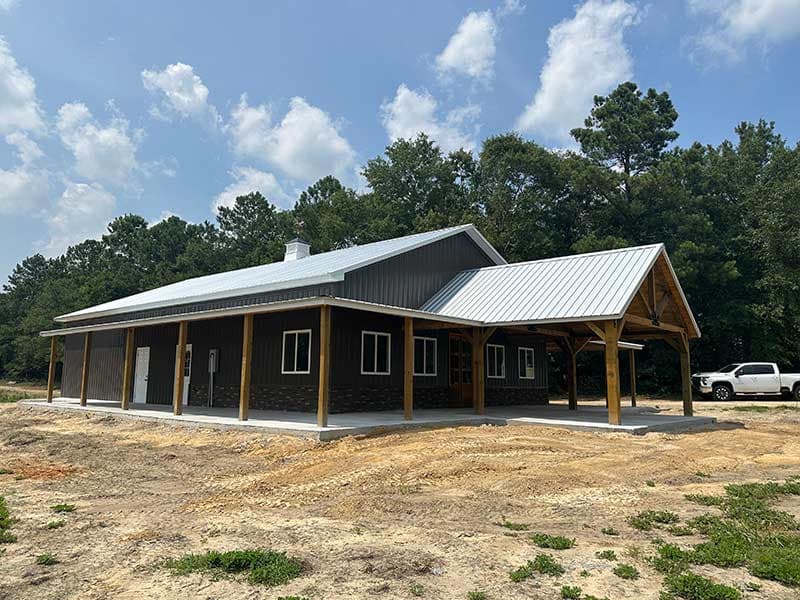
Shop-houses are popular with people who run a trade from home. The usual layouts are living space beside the shop under one long roof, living space above part of the shop, or a separate small house next to a large shop.
Each layout has trade-offs. Shared walls save money but carry noise, fumes and dust, so ask how the builder would separate the two sides with insulation, sealed doors and separate ventilation. A detached home costs more but keeps work and family apart. Ask builders to price at least two layouts before you commit. Think about resale while you're at it. A shop-house suits a narrower group of buyers than a standard home, so a layout that could also pass as a plain house with a big garage may hold its value better.
Steel, post-frame and a framed home on a tight lot
For a wide fleet bay with tall doors, red-iron steel is often the first choice. It spans long distances without interior posts and handles heavy doors well. Post-frame can be less expensive for moderate widths and simpler storage, and it finishes nicely with metal or wood siding.
The living side of a shop-house can be built either way, or framed like a conventional home inside a metal shell. Ask each builder what they recommend and why. If a stick-built house with a separate shop is a better fit, Lowell has a custom home builder on this page and several from Springdale and Rogers.
Making a smaller lot work
In-town lots in Lowell are often smaller than the acreage people picture for a big shop. Before you buy, sketch the building, driveway and turning room on a survey. A long trailer needs room to swing into the door, and you may want parking that doesn't block it. Neighbors are close on in-town lots, so think about lights, noise and where a truck will sit idling. Facing the big doors away from the nearest house can keep the peace.
Ask builders to visit the lot before quoting. They can spot slope, drainage and access problems that change the price, and they can tell you whether the building you want actually fits.
What to ask for in every bid
Shop quotes vary most in the things you can't see in a rendering. Ask each builder to list door sizes and brands, insulation type and R-value, slab details, electrical service and outlets, lighting, gutters and site work. Ask what happens to the price if they hit rock or need extra fill, and whether engineered drawings are included.
Get the schedule in writing too. If the shop is where you make your living, a missed date costs you more than just patience.
Lowell's builder roster
Black Walnut Builders, a custom home builder based in Lowell, is on the page, alongside Casey Turner Construction of Rogers, which builds homes, metal buildings and shops. You'll also find post-frame, red-iron and barndominium builders from Rogers, Springdale, Gentry and elsewhere in Northwest Arkansas, custom home builders from Springdale, Fayetteville and Siloam Springs, and a few statewide post-frame companies. Because Lowell sits right between Rogers and Springdale, builders based in either one are close enough to visit your site often, and both of those pages are worth a look as well.
To compare them, ask for recent shops or homes nearby you can see, references from owners with similar buildings, a written scope listing what's excluded, the warranty terms, and the builder's license status with the Arkansas Contractors Licensing Board.
Sources: Encyclopedia of Arkansas: Lowell (Benton County), City of Lowell Risk Reduction Division, Arkansas Contractors Licensing Board